
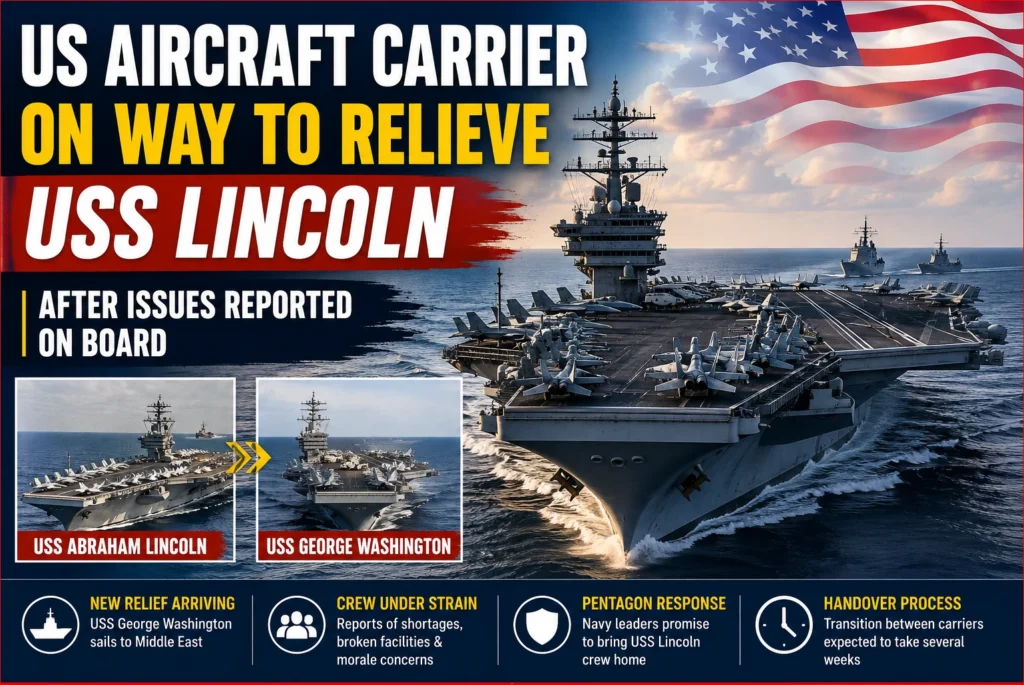
US aircraft carrier deployments to the Middle East are back in the headlines, as the Navy moves to replace one of its longest-serving warships in the region. A US aircraft carrier, the USS George Washington, has now begun sailing toward the Middle East to take over from the USS Abraham Lincoln, whose crew has been at sea for an unusually long stretch of time. The move comes after weeks of reports describing strained conditions aboard the Lincoln, ranging from food shortages to growing concerns about sailors’ mental health.
Why a New US Aircraft Carrier Is Heading to the Middle East
The USS Lincoln has spent more than 260 uninterrupted days at sea, a record-setting deployment tied to America’s ongoing military posture toward Iran. That kind of extended time away from home port puts enormous pressure on both the ship’s equipment and the thousands of sailors living aboard it. As the strain became public, the Pentagon decided it was time to send fresh relief, and the Pacific-based USS George Washington was chosen for the job.
A Record-Breaking Deployment
Carrier deployments typically last six to nine months, but the Lincoln’s assignment has stretched well beyond that. The ship has been central to US operations supporting the broader conflict with Iran, and although tensions have eased somewhat in recent weeks, the Navy has kept a blockade in place around Iranian ports in the Strait of Hormuz. That ongoing mission is one reason officials wanted a US aircraft carrier ready to step in before the Lincoln’s crew reached a breaking point.
Reports of Supply and Morale Problems
Trouble aboard the Lincoln first surfaced publicly in April, when reports of food shortages began circulating. The Navy initially dismissed those accounts as false. Since then, additional reporting has described broken toilets, supply shortfalls, and worsening morale among the crew. Family members who spoke to reporters described difficult conditions their loved ones were living through, and at least one sailor reportedly went overboard during the deployment, prompting lawmakers to demand answers from Navy leadership.
How the Pentagon Has Responded
Defense Secretary Pete Hegseth pushed back on the coverage, calling the reports “completely misrepresented” while praising the sailors’ resilience during a visit to Panama. He said the Navy tries to give every ship and crew everything it can, even though some deployments run longer than others. At the same time, acting Navy Secretary Hung Cao and other Navy leaders held a tense town hall meeting in San Diego with families of Lincoln crew members, where commanders promised to do everything possible to bring the ship home.
What the Navy Says About Mental Health Aboard the Ship
The Navy has stated it has not observed a rise in suicidal thoughts or attempts among the crew, but officials have declined to release supporting data, citing operational security and patient privacy. That silence has not satisfied several Democratic lawmakers, who continue pressing the Pentagon for more transparency and are calling for a bipartisan congressional visit to inspect conditions firsthand.
The Handover Process
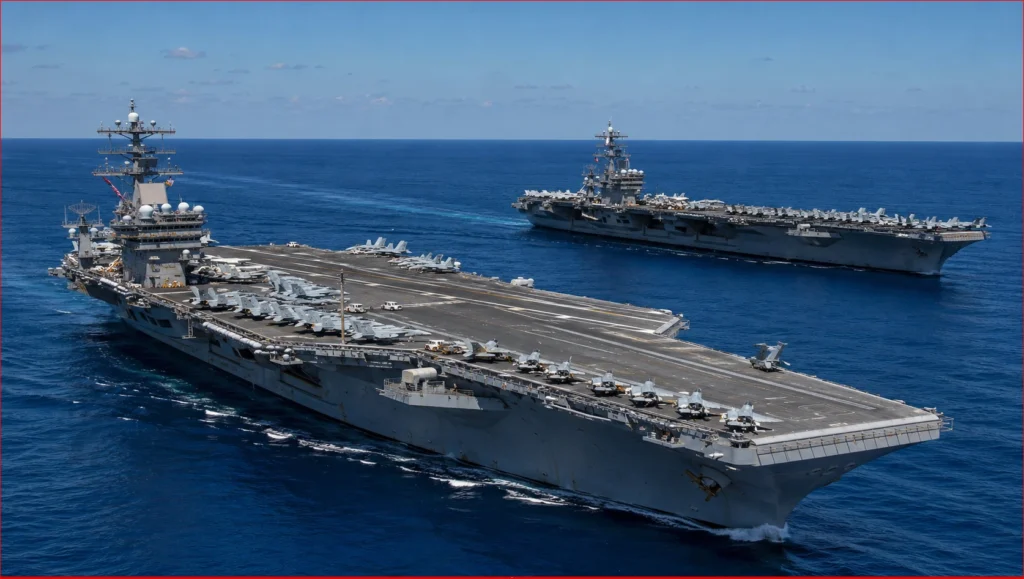
Swapping out a US aircraft carrier on deployment is not instantaneous. The transition between the George Washington and the Lincoln is expected to take several weeks, since the incoming ship must sail into position before the outgoing one can begin its journey home. Reports indicate the George Washington is on a course through the Indian Ocean toward the region. Once the handover is complete, the Lincoln will be one of two carriers currently stationed in the Middle East to be relieved, allowing its crew to finally return home after an exceptionally long stretch at sea.
Not an Isolated Case
The Lincoln isn’t the only carrier whose deployment has raised eyebrows recently. The USS Gerald R. Ford returned home in mid-May after an eleven-month deployment, the longest for a US carrier since the Vietnam War, during which it supported operations tied to Iran and the capture of Venezuelan leader Nicolás Maduro. Together, these extended deployments highlight a broader strain on the Navy’s carrier fleet as it juggles multiple global commitments with a limited number of ships.
FAQ
Which US aircraft carrier is replacing the USS Lincoln?
The USS George Washington, based in the Pacific, is heading to the Middle East to relieve the USS Abraham Lincoln.
Why is the USS Lincoln being replaced?
The Lincoln has been deployed for more than 260 straight days, and reports of food shortages, broken facilities, and mental health struggles among the crew prompted the Navy to send relief.
What has the Pentagon said about the reports?
Defense Secretary Pete Hegseth called the reports “completely misrepresented,” while Navy leaders have pledged to bring the ship’s crew home as soon as possible.
How long will the carrier swap take?
The handover between the George Washington and the Lincoln is expected to take several weeks to complete.
Has this happened with other carriers recently?
Yes. The USS Gerald R. Ford recently completed an eleven-month deployment, the longest for a US carrier since the Vietnam War.