
Another Dangerous Turn in an Already Messy Situation
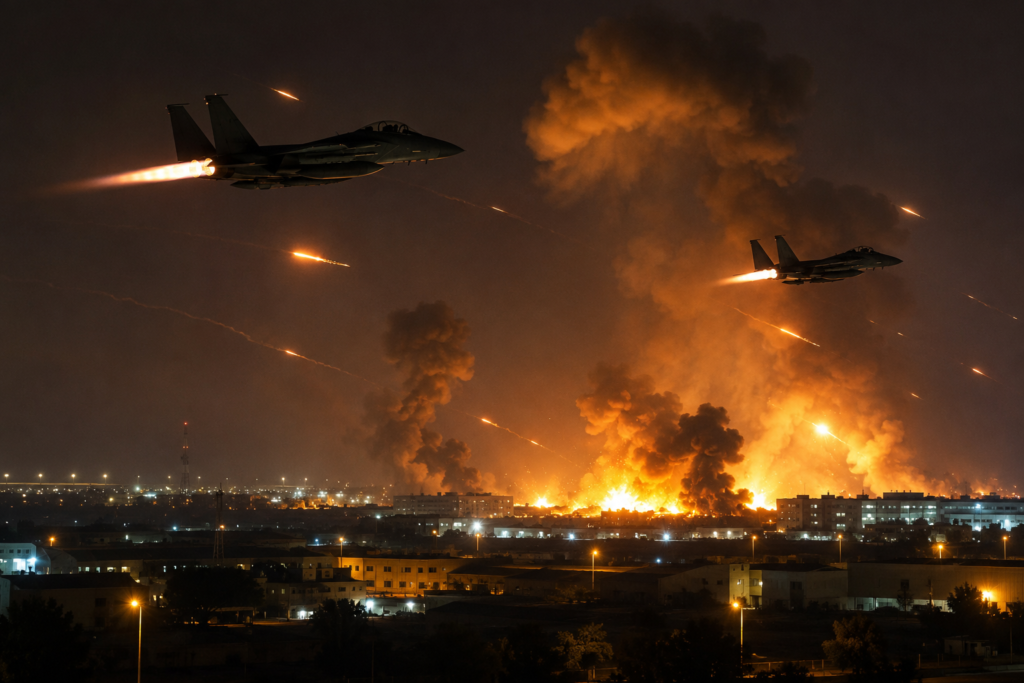
Just when it seemed like things in the Middle East couldn’t get any more tense, Iran fired a barrage of ballistic missiles and drones at American forces stationed in Jordan. Washington didn’t wait long to hit back. Within days, US warplanes were pounding Iranian military sites in a fresh round of retaliatory strikes, and the region found itself staring down what might be its most serious flare-up in months. Israel, Saudi Arabia, Kuwait, and other Gulf states are all tangled up in this now, and there’s a real worry that things could spin further out of control before they calm down.
What Actually Happened in Jordan
Here’s the timeline as US Central Command has laid it out: American troops came under attack while trying to defend against an Iranian missile and drone assault. Two soldiers didn’t make it, several more had to be flown out for medical care, and for a while, one service member was simply unaccounted for. Iran’s Revolutionary Guard Corps didn’t deny it they claimed responsibility, framing the strike as payback for what they called “aggressive” US actions in the region.
This isn’t the first time Jordan has gotten caught in the middle of all this. American installations sit inside the country, and Jordanian forces have shot down plenty of stray missiles and drones passing through their airspace before. What’s different this time is that the attack wasn’t some projectile drifting off course on its way somewhere else t was aimed squarely at American personnel. That’s a different level of escalation entirely.
How Washington Hit Back
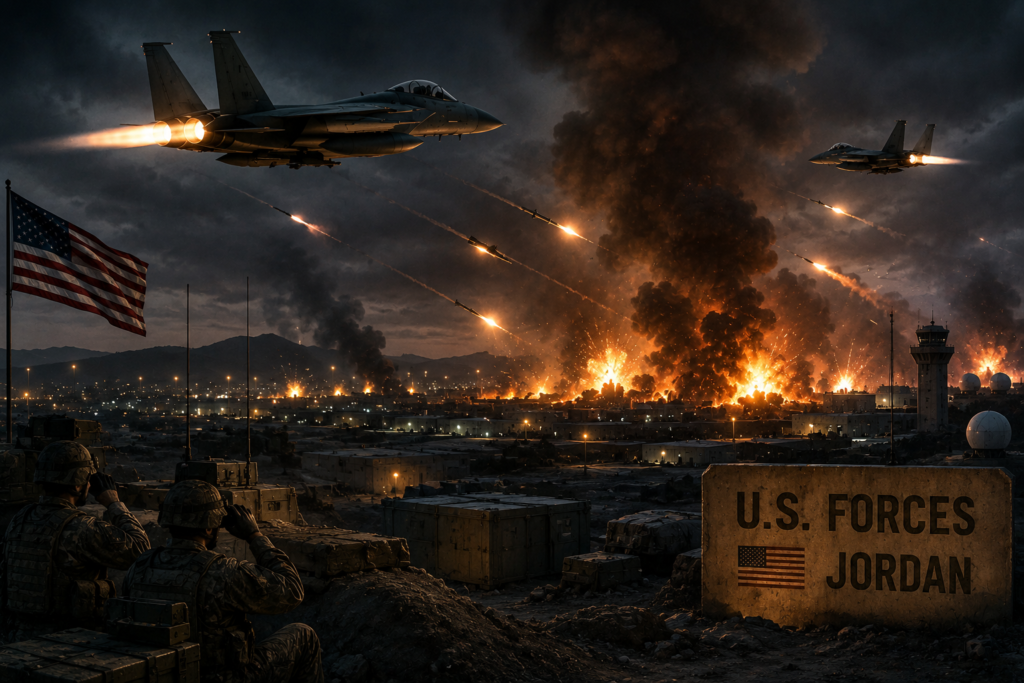
President Trump gave the order almost immediately, and CENTCOM confirmed that US forces carried out strike after strike over several consecutive nights, targeting Iranian assets. The list of what got hit is long surveillance sites, air defense installations, ships and other maritime targets, and depots storing missiles and drones. Officials framed the goal in fairly blunt terms: cripple Iran’s ability to threaten shipping through the Strait of Hormuz and make the IRGC pay for what happened in Jordan.
There’s also a more unsettling wrinkle here. The International Atomic Energy Agency said it was looking into reports that one of the strikes hit near the construction site of a planned Iranian nuclear power plant. Nothing has been confirmed yet, but if it turns out to be true, that adds a whole new dimension of risk to an already volatile situation, given how sensitive Iran’s nuclear ambitions are to begin with.
The Fallout Is Spreading Fast
It’s Not Just Jordan Anymore
This thing has stopped being a two-country story. Iran has also gone after American and allied positions in Kuwait, Saudi Arabia, and Israel, and each of those countries has reported shooting down missiles or drones aimed at their bases and military infrastructure. Saudi Arabia says its air defenses intercepted a mix of missiles and drones near Riyadh, and Kuwait’s military has said it’s actively fending off ongoing attacks of its own.
Israel hasn’t been spared either. Despite having one of the most layered missile defense systems in the world, it’s still absorbing hits — some of which have caused real casualties and damage. Put it all together, and you get a conflict that’s no longer about one incident in one country. It’s bleeding across borders, and there’s no obvious ceiling on how far it could go.
Why the Strait of Hormuz Matters So Much
One thing that keeps coming up in all of this is the Strait of Hormuz. It’s a narrow stretch of water, but an enormous share of the world’s oil moves through it every single day. US officials have made no secret that weakening Iran’s ability to threaten shipping through that strait was a big part of the reasoning behind these latest strikes. If that route gets disrupted for any real length of time, this stops being just a regional military story and starts becoming a global economic one, hitting energy prices everywhere.
Politics, People, and What Comes Next
The Reaction Back Home
Lawmakers from both parties offered condolences pretty quickly after the news broke about the American deaths in Jordan. But so far, there’s little sign that Congress is going to push back on the administration’s decision to keep striking Iran. A few officials have raised concerns about the human toll this is taking especially with reports of civilian casualties piling up on both sides but that hasn’t translated into any real political resistance yet.
Nobody Really Knows Where This Goes From Here
Both Washington and Tehran are signaling that more could be coming, and with several countries already pulled into the fighting, it’s genuinely hard to say how or when this cycle of strike and retaliate is going to break. For now, American troops across the region are on high alert, and the rest of the world is left watching to see whether this settles into an uneasy pause or turns into something much bigger.