
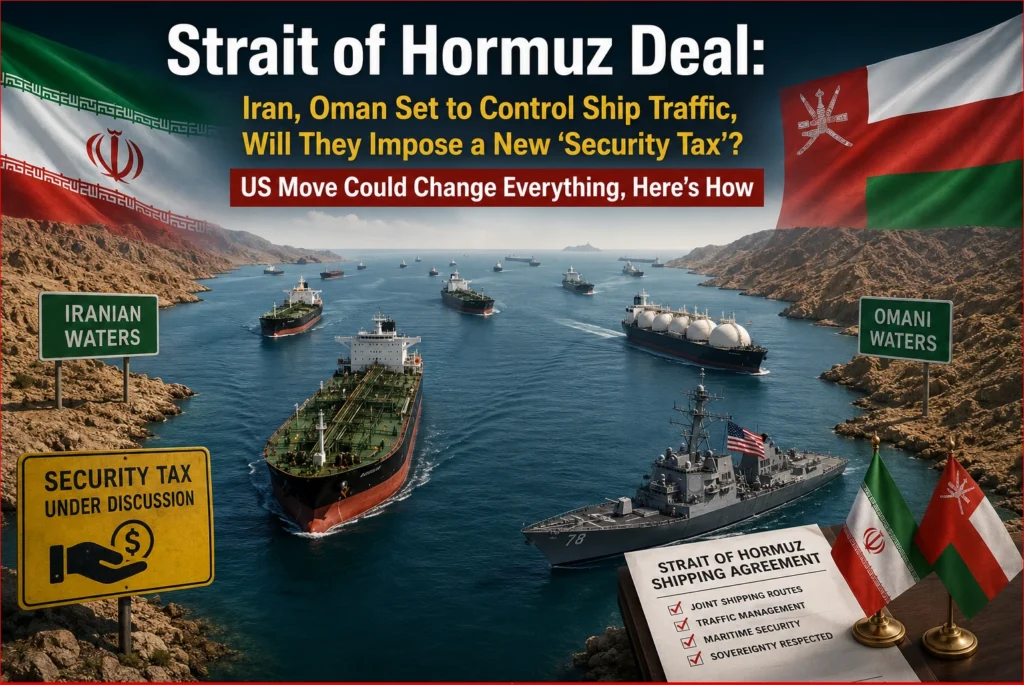
The Strait of Hormuz deal is edging closer to reality, and it could reshape one of the world’s most important shipping corridors. Iran and Oman are reportedly finalizing an arrangement that would let them jointly manage vessel traffic through the strait, a waterway that once carried roughly a fifth of the planet’s oil and gas exports. As talks progress, one question is on everyone’s mind: will ships now be forced to pay a new “security tax” just to pass through? And with the United States signaling it wants a say in the outcome, the entire balance of power in the Gulf could shift.
What Is Happening With the Strait of Hormuz Deal?
Iran and Oman have reportedly agreed on a shared “shipping map” that lays out specific routes vessels can use to move safely through the strait. This map is part of a wider agreement meant to govern how traffic flows through the waterway, while still letting each country maintain its own sovereignty over its territorial waters. The strait is split between Iranian and Omani waters, so any workable deal has to satisfy both sides.
The push toward this agreement follows months of disruption. Since a war between the US, Israel, and Iran broke out in February 2026, the strait has seen repeated attacks on commercial ships, mined waters, and a steep drop in traffic. Vessels have been damaged, seized, or forced to sit idle for weeks while shipping companies weighed the risks of moving through the corridor.
Why the Strait of Hormuz Matters So Much
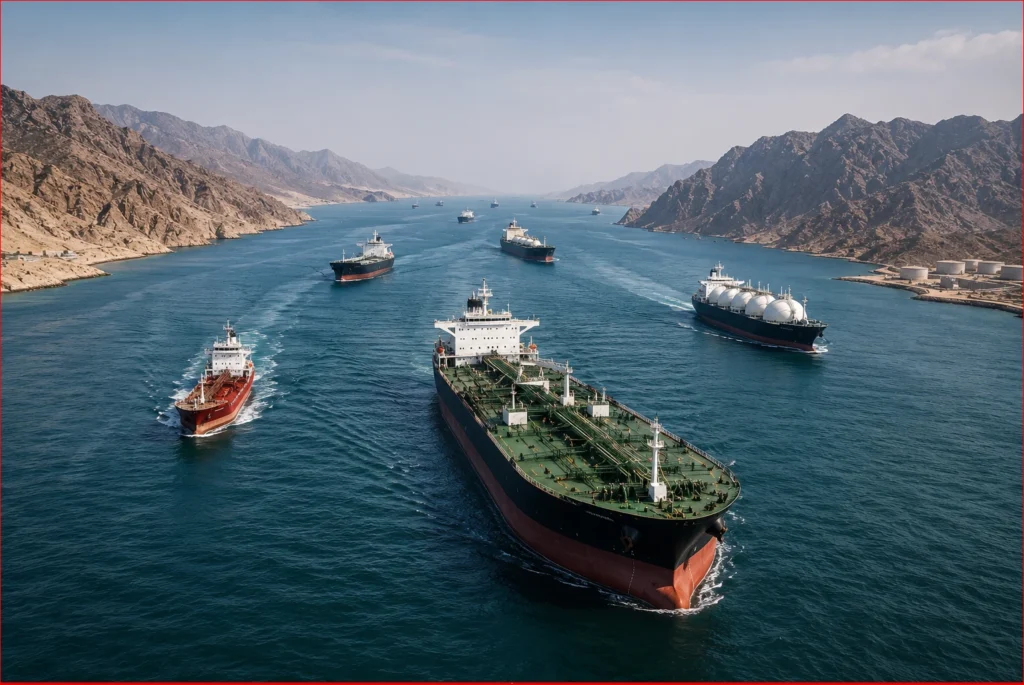
Before the crisis began, close to a fifth of the world’s crude oil and petroleum products, along with a similar share of liquefied natural gas, passed through this narrow passage between the Persian Gulf and the Gulf of Oman. Any disruption there sends ripples through global energy prices, and any new fees or restrictions could raise shipping costs for months or years to come.
Will Iran Impose a New Security Tax on Ships?
This is the part of the Strait of Hormuz deal that has shipping companies and energy traders on edge. Iranian officials have not yet confirmed whether vessels passing through the strait will be charged a transit fee, saying that a further round of negotiations is still needed to settle those details. However, earlier reporting shows an Iranian parliamentary committee already voted in favor of imposing tolls on ships using the strait, along with barring US- and Israel-linked vessels entirely.
If a security tax does get introduced, it would mark a major shift. For decades, the strait has functioned as an international waterway open to global trade without a toll system. A new fee structure, even a modest one, could add fresh costs to global shipping and further complicate an already fragile energy market.
What Iran and Oman Both Want
The core of the negotiation comes down to two questions: who actually controls the strait, and whether Iran has the right to charge ships for passing through it. Oman, as a neutral party with its own territorial claim to part of the waterway, appears to be positioning itself as a mediator that can help legitimize whatever arrangement is reached, while also protecting its own maritime interests.
How the US Move Could Change Everything
Washington has made it clear it doesn’t intend to sit on the sidelines. In a recent speech, President Trump described the US naval blockade of Iranian ports as giving the United States effective control over the strait, and went as far as suggesting the US could eventually treat Hormuz as if it were American territory. Iran’s Foreign Minister has pushed back firmly, stating that any bilateral deal with Oman does not mean the strait is simply reopening to everyone, especially not to vessels linked to the US or Israel.
This tension means the Strait of Hormuz deal isn’t just a two-country negotiation anymore. Any US military posture in the region, along with sanctions or further strikes, could directly affect whether Iran and Oman’s agreement actually holds up in practice. Shipping companies are watching closely, since a deal on paper means little if attacks continue or if the US takes further action that Iran considers provocative.
What This Means for Global Shipping and Oil Prices
Even a partial resolution could ease some of the pressure on global energy markets, but uncertainty over fees, safe passage guarantees, and US involvement means shipping companies are likely to stay cautious. Insurance costs for vessels transiting the strait remain elevated, and many operators may continue rerouting or delaying shipments until the terms of any final agreement are made public.
FAQ
1. What is the Strait of Hormuz deal between Iran and Oman?
It’s a developing agreement where Iran and Oman would jointly manage a defined shipping route through the strait, aiming to restore safer passage for commercial vessels after months of attacks and disruption.
2. Will ships have to pay a security tax to use the Strait of Hormuz?
It hasn’t been confirmed yet. Iranian officials say fee details will be worked out in a later round of talks, though an Iranian parliamentary committee has already backed the idea of tolls on ships passing through the strait.
3. Why is the US involved in the Strait of Hormuz negotiations?
The US has maintained a naval presence and blockade near Iranian ports during the conflict, and American officials have suggested Washington wants influence over how the strait is governed going forward.
4. How much global oil and gas passes through the Strait of Hormuz?
Before the disruptions began, around a fifth of the world’s oil and petroleum products and a similar share of liquefied natural gas moved through the strait each year.
5. Will the Strait of Hormuz deal reopen the waterway to all countries?
Not necessarily. Iranian officials have said a deal with Oman doesn’t automatically mean the strait reopens to every nation, particularly vessels connected to the US or Israel.
6. How could this deal affect global oil prices?
If the agreement restores safe passage, it could help stabilize energy prices. But uncertainty over fees, security guarantees, and continued US-Iran tension means markets may stay volatile for a while longer.