
NEW YORK — In a jaw-dropping, history-shaking courtroom drama on Monday, ousted Venezuelan president Nicolás Maduro defiantly pleaded not guilty to a sweeping set of U.S. federal charges—including narco-terrorism, cocaine trafficking, weapons possession and conspiracy—just days after a high-risk U.S. military strike captured him in Caracas.
Wearing a blue detention uniform and flanked by federal agents, Maduro stood before a Manhattan federal judge and spoke through a Spanish interpreter: “I’m innocent. I am not guilty. I am a decent man and still the president of my country.” The initial appearance was brief but electrifying, setting the stage for what is expected to become one of the most turbulent legal and geopolitical battles of the decade.
Captured After Explosive U.S. Raid
The former Venezuelan leader and his wife, Cilia Flores, were seized in a surprise U.S. military operation in Venezuela’s capital earlier this weekend—a move that stunned world leaders and thrust hemispheric relations into a dangerous backdraft. The United States says the mission dealt a crippling blow to Maduro’s alleged criminal enterprise, accusing him of running the state as a narco-trafficking hub responsible for funneling thousands of tons of cocaine into American cities over decades.
Hours before his arraignment, Reuters described the unfolding moment: Maduro was flown in a U.S. military helicopter under tight security from a detention facility in Brooklyn to the federal courthouse in lower Manhattan. His wife was also in custody and entered a not-guilty plea to similar charges.
Despite the gravity of the charges, Maduro’s legal team signaled they were ready for an iron-clad fight, with defense attorneys hinting that the legality of his abduction and the U.S. operation will face intense scrutiny in the coming months.
Trump’s Stark Message: “We’re in Charge”
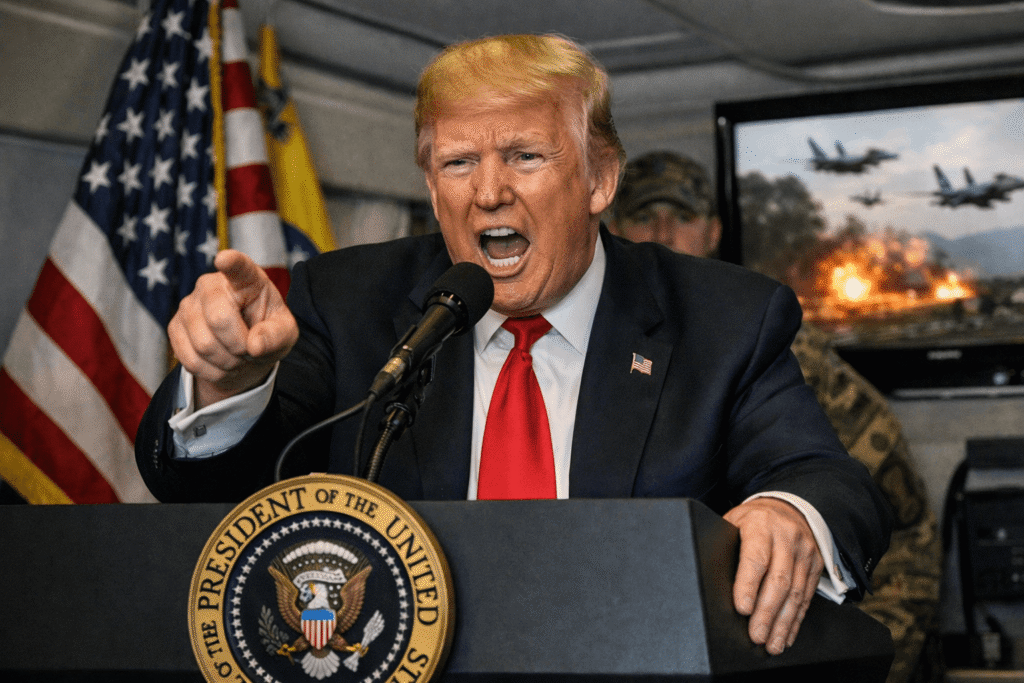
President Donald J. Trump—who authorized the strikes against Venezuelan military targets and the capture of Maduro—used the diplomatic fallout as a platform to issue ominous warnings to other nations.
Speaking aboard Air Force One, Trump proclaimed that the U.S. is now “in charge” of Venezuela’s future and signaled that Washington could turn its sights toward other nations unless they align with American strategic goals. His remarks included pointed threats toward Colombia and Cuba, suggesting that any nation seen harboring drug networks or undermining U.S. security could face military or economic consequences.
In a stark and symbolic emphasis on strategic resources, Trump also stressed American interests in Venezuela’s vast oil reserves—the largest proven in the world. “We’re taking back what they stole,” Trump said, pushing the narrative that U.S. companies could eventually participate in revitalizing the energy sector, a move that has ignited fierce debate about motives behind the military operation.
Global Outrage and Calls for Diplomacy
The U.S. action has triggered a chaotic diplomatic storm. The United Nations Security Council met in emergency session to discuss the legality of the strike and the apparent breach of international norms. Several countries, including China, condemned the U.S. for what they termed a flagrant violation of sovereign rights and a dangerous precedent that could destabilize global order.
Mexico’s leaders publicly rejected any notion that Mexico could be a U.S. target, dismissing Trump’s broad language toward regional actors as fear-mongering. Russia and Cuba expressed outrage, calling for Maduro’s immediate release and accusing the U.S. of aggression under the guise of anti-drug operations.
Venezuela’s Turmoil: New Leadership and Deep Divisions
Back in Caracas, Venezuela’s power structure is in flux. Delcy Rodríguez has been sworn in as acting president by the national assembly, trying to steady a nation reeling from shock and uncertainty. In a public statement, Rodríguez expressed a desire for dialogue and peaceful coexistence with the United States, even as protesters rallied against the U.S. operation and called for Maduro’s release.
However, Maduro’s own supporters have rejected the legitimacy of the U.S. intervention as a “kidnapping” and an assault on national sovereignty. Maduro’s son, addressing Venezuela’s legislature, issued a fiery warning that normalizing the abduction of a head of state would leave no nation safe.
What Happens Next? A Legal and Political Firestorm
Maduro’s not-guilty plea kicks off what may become a protracted legal battle in U.S. courts—possibly extending into complex debates over diplomatic immunity, international law, and the validity of the U.S. capture. The next key hearing is scheduled for March, when both sides are expected to begin deep discovery and constitutional challenges.
Meanwhile, the Trump administration appears undeterred, defending the military action as a necessity in the war on drugs and a bold assertion of American power. As global reaction continues to roil capitals from Caracas to Beijing, the situation remains volatile, unpredictable and potentially explosive.