
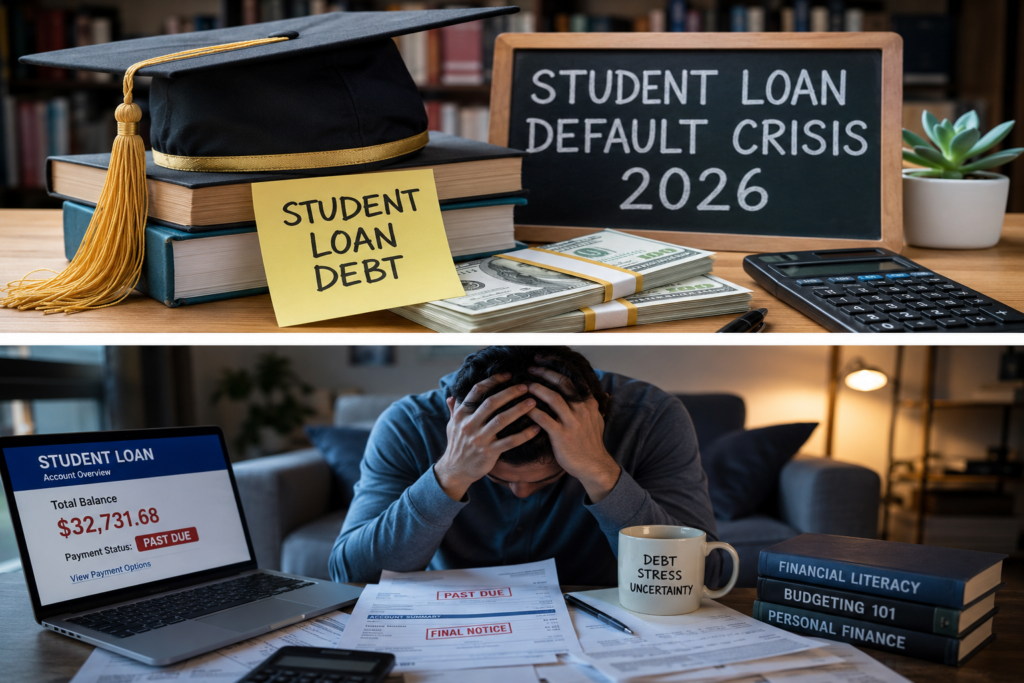
The student loan default crisis in 2026 has become one of the biggest financial challenges facing millions of borrowers across the United States. After the return of federal student loan payments, many people have struggled to keep up with their monthly bills while balancing inflation, housing costs, and everyday expenses.
For many borrowers, default is more than just a financial setback—it can affect credit scores, job opportunities, and long-term financial goals. However, despite these challenges, many Americans are also finding ways to rebuild their financial lives through repayment plans, budgeting, and financial education.
This article explores 7 shocking facts about the student loan default crisis in 2026, why it matters, and what borrowers can do to recove
What Is the Student Loan Default Crisis?
A student loan enters default when a borrower fails to make required payments for an extended period, according to the loan’s terms. Default can have serious consequences, including damage to a borrower’s credit history, collection efforts, and additional fees.
As repayment requirements resumed, many borrowers found themselves struggling after years of payment pauses, making the issue a major financial concern in 2026.
1. Millions of Borrowers Are Facing Financial Pressure
One of the biggest surprises in 2026 is the number of borrowers experiencing financial hardship. Rising living expenses, inflation, and increasing housing costs have made monthly student loan payments difficult for many families.
Even borrowers with steady jobs have found it challenging to balance student loans with other financial responsibilities.
2. Default Can Significantly Impact Credit Scores
Missing payments over time can seriously damage a person’s credit score. A lower credit score may make it more difficult to qualify for mortgages, auto loans, or even certain rental agreements.
Maintaining on-time payments is one of the most important ways to protect long-term financial health.
3. Many Borrowers Don’t Know Their Repayment Options
A surprising number of borrowers are unaware of repayment plans that may lower their monthly payments based on income.
Learning about available repayment options and contacting loan servicers early can help borrowers avoid unnecessary financial problems.
4. Financial Stress Is Affecting Daily Life
Student loan debt doesn’t only impact finances—it also affects mental well-being. Many borrowers report delaying major life decisions such as buying a home, starting a family, or saving for retirement because of debt concerns.
Financial planning and professional guidance can help reduce this stress over time.
5. Recovery Is Possible After Default
Although default is serious, it is not the end of a borrower’s financial journey. Many people successfully rebuild their credit through consistent payments, budgeting, and responsible financial habits.
Recovery often takes time, but steady progress can make a meaningful difference.
6. Budgeting Has Become More Important Than Ever
Creating a monthly budget allows borrowers to understand where their money is going and identify opportunities to reduce unnecessary spending.
Even small adjustments in spending habits can make it easier to stay current on loan payments.
7. Financial Education Is Helping Borrowers Move Forward
More borrowers are taking advantage of financial education resources, budgeting tools, and repayment information than ever before.
Understanding personal finance can help borrowers make smarter decisions and avoid future financial difficulties.
Tips to Avoid Student Loan Default
- Always make payments on time whenever possible.
- Contact your loan servicer if you’re experiencing financial hardship.
- Explore income-driven repayment options if available.
- Create a realistic monthly budget.
- Build an emergency savings fund over time.
- Monitor your credit score regularly.
- Seek financial counseling if you need additional guidance.
Final Thoughts
The 7 Shocking Facts About the Student Loan Default Crisis in 2026 highlight how challenging student debt can be for millions of borrowers. While financial pressures remain significant, there are also practical steps that can help people regain control of their finances.
By staying informed, making timely payments, exploring repayment options, and building healthy financial habits, borrowers can reduce the risk of default and work toward long-term financial stability. The student loan crisis continues to evolve, but education and proactive financial planning remain the strongest tools for overcoming these challenges.