
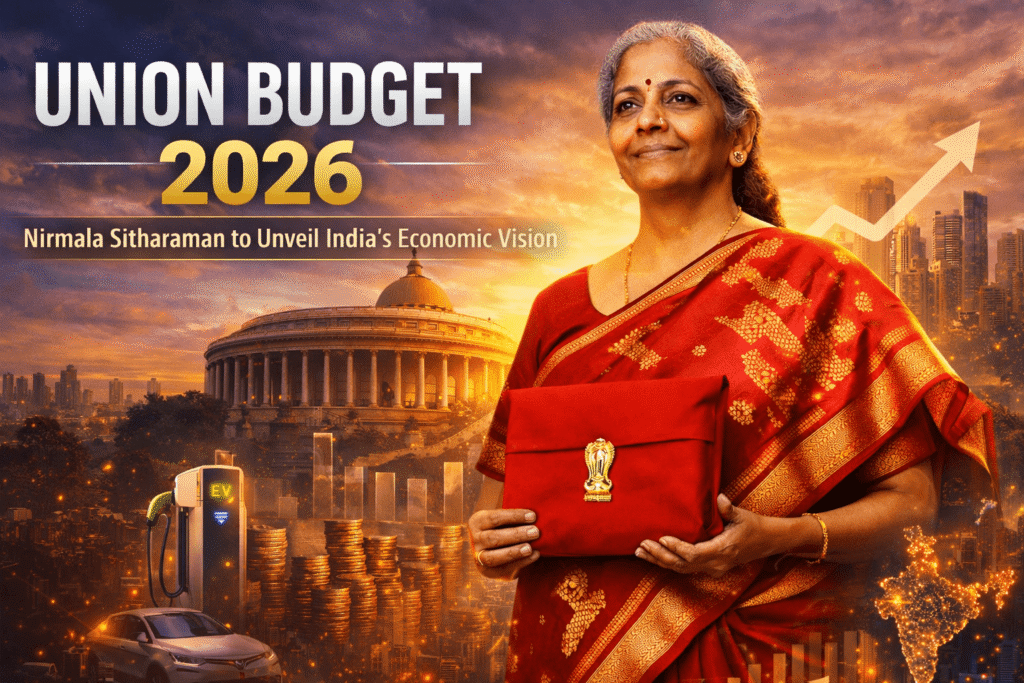
For the first time in decades, experts believe that Part B of the Budget speech — traditionally a mechanical section of policy and tax details — could emerge as a powerful narrative on India’s future economic direction. Rather than being a routine exercise, the government is poised to weave together short-term priorities and long-range dreams as India enters a pivotal phase of its development.
A Nation Watching: Growth, Fiscal Discipline, and Jobs
Economists and market watchers are buzzing with expectations that the Budget will balance high economic growth with fiscal responsibility. India has already achieved a fiscal consolidation path with the fiscal deficit shrinking to below 4.5% of GDP in the current year. Markets will now be keen to see whether the government will lay out a clear fiscal deficit target for 2027, even as it continues to emphasize reducing the debt-to-GDP ratio — a shift that many believe will give the economy more stability and room for growth. Public investment is also expected to play a starring role. With capital expenditure (capex) set at around ₹11.2 lakh crore this year, forecasts suggest the Budget may increase this outlay substantially, perhaps by up to 10–15% — a move that would boost infrastructure spending on roads, energy, railways, and ports, and help revive private investment sentiment.
Behind the scenes of India’s economic engine are the Micro, Small and Medium Enterprises (MSMEs) — the backbone of jobs and entrepreneurship. Leading industry voices are urging the government to further ease GST compliance, simplify regulatory frameworks, and provide targeted support so MSMEs can scale up, innovate, and compete globally.
The education and skilling ecosystem is another area getting intense focus ahead of the Budget. Stakeholders are advocating for policies that strengthen digital infrastructure for education, support teacher upskilling, and align skills training with future job markets, especially as India’s young workforce prepares for the digital age.
Electric mobility is no longer just a trend — it’s a transformation. India’s rapid shift to EV adoption has sparked calls for the Budget to turn the EV boom into a manufacturing powerhouse by boosting local production, stable financing, and policy support for chargers and supply chains that make India a global EV leader.
Technology and digital public infrastructure (like UPI, Aadhaar, ONDC, and other platforms) are also expected to feature prominently, helping India extend seamless services in finance, healthcare, education, and governance — powering inclusion and innovation alike.
Everyday Lives: Health, Education, and Rural Safety Nets
This Budget isn’t just about macroeconomics — it’s about people. With fresh discussions around schemes like G RAM G (a reimagined rural job and livelihood mission), public spending on health, and education infrastructure, millions of Indians are hoping to see meaningful commitments that touch lives directly.
Nominal GDP growth expectations — potentially around the double-digit mark — will offer clues about inflation and consumer demand in the year ahead, and help families and businesses plan with confidence.
As India’s citizens await tomorrow’s Budget with hope and a sense of possibility, one thing is clear: this year’s Union Budget 2026 isn’t just another financial statement — it’s a story about India’s aspirations, resilience, and roar toward a brighter economic horizon.
Disclaimer: This article is based on current reports and pre-Budget expectations. The actual Budget announcements may differ once the Finance Minister officially presents the Budget.